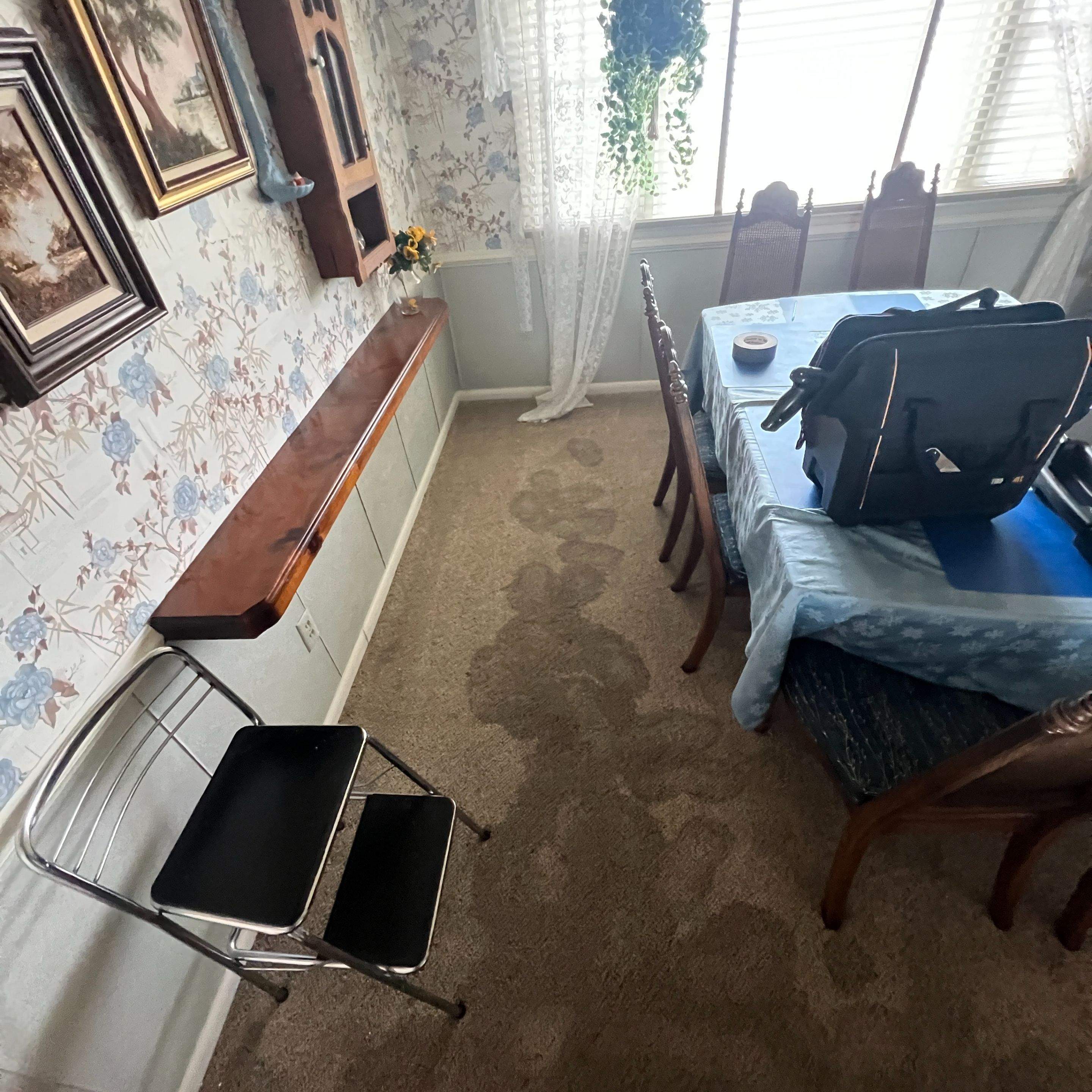
Quick Answer: Storm Flood Cleanup in Versailles
Professional storm damage water restoration in Versailles typically runs 3 to 7 days for drying, costs between $2,500 and $9,500 for residential losses, and follows a defined IICRC S500 sequence: extraction, demolition of unsalvageable materials, structural drying, antimicrobial treatment, and reconstruction. Most homeowners insurance policies cover sudden storm-driven water intrusion through a damaged roof or window, though groundwater flooding usually requires separate flood insurance.
What Storm Damage Water Restoration Actually Includes
Storm flooding is rarely clean water. Wind-driven rain through a compromised roof picks up shingle granules, attic insulation fibers, and bacteria. Rising groundwater carries lawn chemicals, fuel residues, and sewage backflow. That is why crews treat almost every storm loss as Category 2 (gray water) at minimum.
Standard Scope of Work
- Emergency water extraction with truck-mounted and portable units
- Content pack-out and inventory for damaged personal property
- Controlled demolition of saturated drywall, insulation, and flooring
- Antimicrobial application to inhibit mold growth
- Structural drying with air movers and LGR dehumidifiers
- Daily moisture readings logged for your insurance adjuster
- Final clearance testing before reconstruction begins
What a Legitimate Crew Will Not Do
- Skip moisture mapping or psychrometric documentation
- Promise to "save" carpet pad after sewage contact
- Demand cash up front before insurance approval
- Refuse to provide a written scope tied to Xactimate line items
Red Flags When Hiring a Storm Restoration Company
- Door-to-door solicitation after a major Versailles storm
- No physical local address or BBB profile
- Pressure to sign an Assignment of Benefits before scope is set
- No IICRC certification number they will share
- Vague pricing with no written estimate
- Out-of-state plates with no local references
- Refusal to coordinate directly with your insurance adjuster
IICRC Water Categories and What They Mean for Your Versailles Home
The category of water determines what gets dried versus what gets demoed. This single decision drives 60 percent of your final invoice.
| Category | Source Example | Typical Action | Cost Range |
|---|---|---|---|
| Cat 1 (Clean) | Supply line break, rainwater through skylight | Extract and dry in place | $1,500 to $4,000 |
| Cat 2 (Gray) | Storm runoff, washing machine discharge | Remove porous materials, sanitize, dry | $3,000 to $7,500 |
| Cat 3 (Black) | Sewage backup, floodwater, river overflow | Full demo of contacted porous materials, biohazard protocol | $5,500 to $15,000+ |
If your Versailles basement took water from a sump pump failure during the storm, that often qualifies as Category 2 but can degrade to Category 3 within 48 hours. For deeper detail on pump failures, see our breakdown of sump pump failure basement flooding solutions.
The First 24 Hours: What You Should Do Right Now
- Shut off electricity to flooded areas at the breaker, only if the panel is dry and accessible
- Photograph everything before moving a single item. Wide shots, then close-ups
- Call your insurance carrier to open a claim and get the claim number in writing
- Move undamaged contents to a dry room or garage
- Pull back area rugs and lift furniture legs onto foil or wood blocks
- Do not run household HVAC if water reached ductwork
- Call an IICRC certified restoration company for emergency mitigation
Mitigation is time-sensitive under your policy. Most carriers require you to take "reasonable steps" within 24 to 72 hours or they can deny portions of your claim. Versailles Water Restoration dispatches to Versailles addresses 24/7 and arrives with extraction equipment ready to start the meter on documented mitigation.
What to Have Ready When the Crew Arrives
- Your insurance policy number and claim number
- A list of high-value contents already moved or damaged
- Access to the affected areas, including the electrical panel
- Any prior photos of the space showing pre-loss condition
- A point of contact who can sign work authorizations on site
Having these items ready can shave several hours off the start of mitigation and gives the lead technician a cleaner baseline for documentation.
Insurance: What Storm Damage Policies Usually Cover
Generally Covered
- Wind-driven rain through storm-damaged roof or windows
- Tree impact creating a building opening
- Sudden ice dam intrusion
- Power surge damaging sump pump (sometimes, check endorsements)
Generally Excluded Without Separate Coverage
- Rising groundwater and surface flooding (requires NFIP flood policy)
- Sewer backup without a backup endorsement
- Long-term seepage or neglected maintenance
Bring your declaration page when you call. We help Versailles homeowners read their coverage out loud so there are no surprises when the adjuster shows up. For storm-specific service detail, see our storm damage restoration page.
Documenting the Claim Properly
The single biggest reason storm claims get reduced is poor documentation. Keep a running log of every contractor visit, every piece of equipment placed, and every conversation with your adjuster. Versailles Water Restoration provides daily drying logs, thermal images, and moisture content readings for each affected material. That paper trail makes the difference between a fully paid claim and one that gets argued down in supplements.
Cost Breakdown for Versailles Storm Flood Losses
| Service Component | Typical Range | Notes |
|---|---|---|
| Emergency extraction | $400 to $1,500 | Priced per gallon or per affected square foot |
| Structural drying (3 to 5 days) | $1,200 to $3,800 | Equipment count drives the number |
| Demolition and debris haul | $800 to $2,500 | Drywall, baseboard, flooring, insulation |
| Antimicrobial treatment | $300 to $900 | Required on all Cat 2 and Cat 3 losses |
| Reconstruction | $2,500 to $20,000+ | Separate phase, often separate trades |
For a deeper line-by-line walkthrough, our water damage restoration cost breakdown covers how adjusters price each component using Xactimate.
Factors That Push a Versailles Loss Toward the High End
- Multi-story water travel that affects ceilings below the source
- Hardwood flooring that requires specialty mat drying systems
- Saturated wall cavities requiring drill holes and injected airflow
- Asbestos or lead testing on homes built before 1980
- Contents storage at an offsite climate-controlled facility
- Detached structures like garages or finished sheds
Crews that mobilize more equipment up front tend to deliver shorter overall dry times, which can offset the higher daily equipment line. Ask for a projected dry-out timeline in writing during the first visit.