The Upstairs Bathroom That Was Not the Bathroom
One Versailles homeowner called us on a Tuesday morning convinced the upstairs toilet supply line had failed. The ceiling below the bathroom showed a soft six-inch stain and a small bulge. Our tech pulled moisture readings across the entire ceiling plane, and the wettest point was actually three feet north of the bathroom, directly under an HVAC chase. The real culprit was a sweating AC condensate line that had been dripping for weeks. We documented the readings, opened a small inspection cut, confirmed the source, and had the homeowner shut the system down while we placed two air movers and a small dehumidifier. Total dry time was 48 hours, drywall patch and paint came in around 850 dollars, and insurance covered the loss as sudden and accidental once we provided the moisture map. Had they ripped out the bathroom tile based on a guess, they would have spent ten times that and still had a wet ceiling.
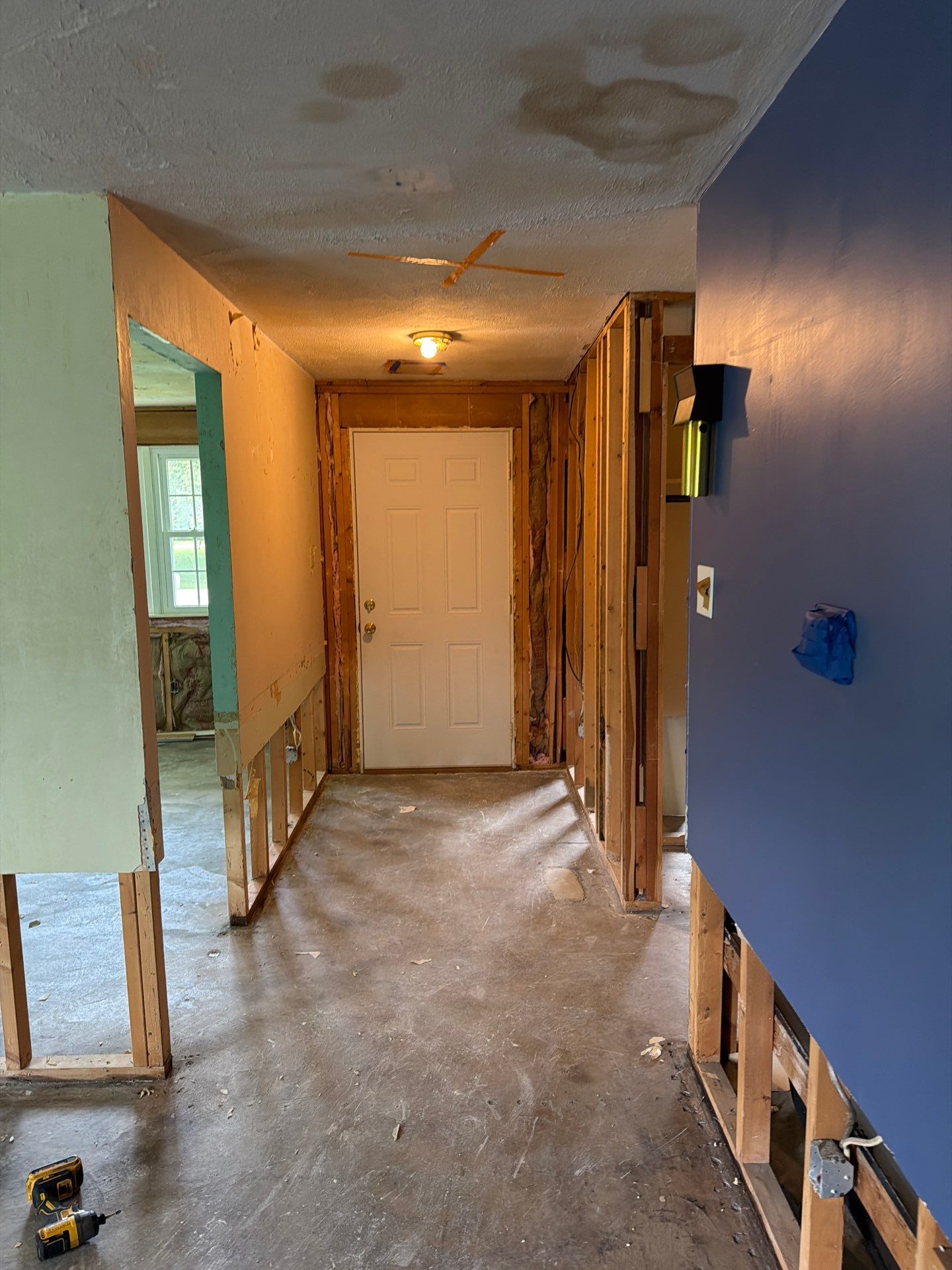
What made this job representative of so many others was the gap between what the stain looked like and where the water actually was. Ceilings are gravity maps with detours. Water travels along the path of least resistance, which usually means along a joist, a wire run, or a duct boot, and then drops where it finds a seam or a fastener. We see this pattern five or six times a month in Versailles, and it is the single biggest reason we never start tearing into a ceiling before the meter tells us where to cut.
The Slow Roof Leak in a 1960s Ranch
A retired couple near South Adams Street Area noticed faint coffee-colored rings every spring for three years. They assumed it was condensation. When a heavy April storm pushed the stain into a soft sag, they called. The attic told the story: a single nail had backed out of a shingle around 2021, and every wind-driven rain pushed water down a rafter and onto the ceiling drywall. The insulation above the stain was matted, black with mold, and held nearly four pounds of trapped moisture. We coordinated with a roofer for the shingle repair, removed a 4x6 section of ceiling, bagged the contaminated insulation per IICRC S520 guidance, and ran a containment with a HEPA scrubber for three days. The homeowner asked the question we hear constantly: was this covered? In their case, no, because the leak was deemed long-term. That conversation is hard, and we have it honestly. If we cannot help, or if your claim is unlikely to pay, we will tell you directly. You can read more about how we handle these situations on our water damage restoration page.
What the Stain Color Can Tell You
Color is a clue, not a diagnosis, but it helps us start the conversation when a homeowner calls. A bright white ring with a yellow center usually points to clean supply water that sat long enough to leach paper sizing from the drywall. A rusty brown ring often means the water traveled across metal, either a nail plate, a duct, or roofing flashing. A grayish or greenish tint can suggest organic growth has already started, which changes how we handle removal. Black speckling at the edge of a stain is a flag for active mold and almost always means containment before demolition.
The Burst Supply Line at 2 a.m.
This one was loud. A braided supply line under a second-floor vanity failed at full pressure around two in the morning. By the time the homeowner found the main shutoff, water had been running for roughly twelve minutes. The first-floor ceiling in the foyer was holding so much weight that a section the size of a dinner plate dropped on its own before we arrived. Our crew was on site inside 60 minutes. We extracted standing water, performed controlled demolition on the saturated drywall (about 32 square feet), pulled the wet insulation, and set six air movers with two LGR dehumidifiers. Readings hit drying goals on day four. Total mitigation invoice was just under 4,200 dollars, and the reconstruction (drywall, texture, paint, two light fixtures) came to roughly 3,100 dollars. The insurance adjuster approved the full scope because we documented every reading. If you want the deeper breakdown on what these emergencies cost, our guide on burst pipe water damage and repair costs walks through it line by line.
One detail from that night that homeowners often miss: the foyer chandelier was still energized when we arrived, with water visibly tracking along the mounting bracket. We killed the circuit at the panel before anyone walked under it. If you take one thing from this story, let it be that. A wet ceiling with a light fixture in it is an electrical hazard until proven otherwise, and finding the right breaker at 2 a.m. is worth the two minutes it costs you.
The Commercial Office Ceiling Tile Job
Not every ceiling is drywall. A small Versailles office called after a rooftop unit drain backed up over a long weekend. Twenty-two acoustic ceiling tiles were sagging, the carpet tiles below were saturated, and the tenant was worried about Monday operations. We worked overnight, replaced tiles, extracted the carpet, set drying equipment under tented plastic, and the office opened on time. The property manager handled it through their building policy. For situations like this we point owners to our commercial water restoration service so the scope and documentation match what their carrier expects.
When You Should Call Tonight, Not Tomorrow
If your ceiling is sagging, bulging, or dripping actively, that is not a wait-until-morning situation. Drywall holds water until it cannot, and then it falls, often onto furniture, electronics, or a person. If you see any of the following in Versailles, pick up the phone: a visible bulge, water tracking along a light fixture, a stain that is growing while you watch, or a musty smell that appeared with the stain. Versailles Water Restoration is IICRC certified, BBB A+ rated, and answers calls 24 hours a day across central Indiana.
What These Jobs Have in Common
Different sources, different ceilings, same playbook. In every case the steps were:
- Find the actual source, not the visible stain, using moisture meters and thermal imaging
- Stabilize the leak before any drying begins
- Remove only what is unsalvageable, document everything for the carrier
- Dry to measured goals, not to a calendar
- Rebuild the ceiling so the repair is invisible