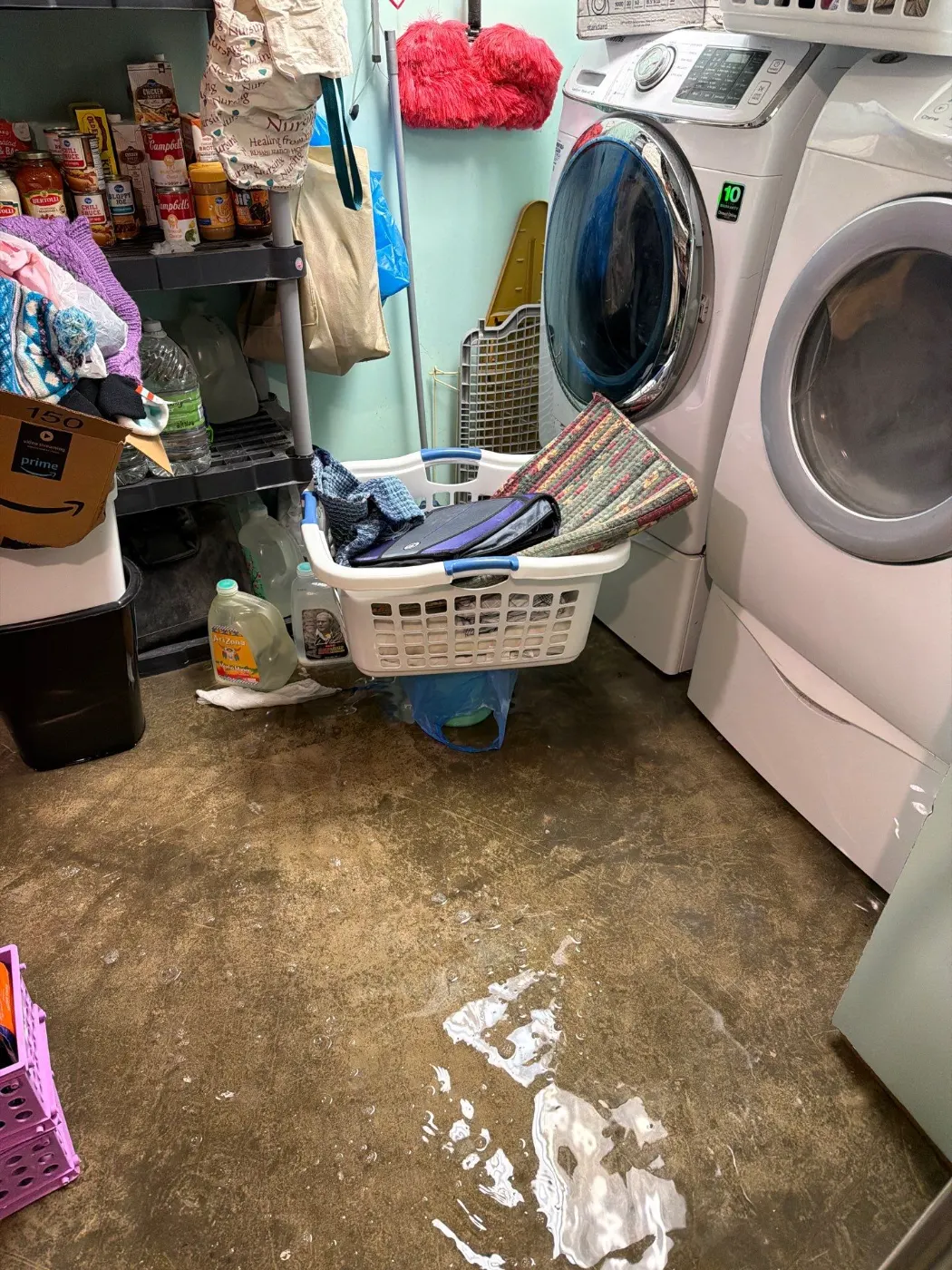
Commercial Storm Damage in Versailles, IN
Multitenant buildings and warehouse slabs get commercial drying capacity across Versailles and Ripley County.
Versailles Water Restoration delivers Commercial Storm Damage across Versailles and surrounding areas with certified crews available 24/7 and every step documented for insurance. Call (765) 517-7678.
- Service: Commercial Storm Damage for Versailles homeowners
- Service area: Versailles, IN and surrounding areas
- Response time: Same day emergency response for Versailles; 24/7 availability
- Licensed and insured (License #RC21100059)
- Serving Versailles, IN since 2018
Commercial Storm Damage for Versailles Businesses
One storm cell crossing Ripley County can put water into several buildings in your portfolio at once, and no property manager can stand in all of them. Versailles Water Restoration writes each scope in the same format, so a wet suite in Versailles and a wet warehouse bay at another property read the same way when ownership compares them.
Commercial storm losses often get split between ownership and tenants, so Versailles Water Restoration documents yours by suite from the start. Readings, photos and equipment time get tracked by space in your Versailles building, and common areas and the roof get their own lines. That breakdown is built as the job runs, which is easier than reconstructing it from invoices later.
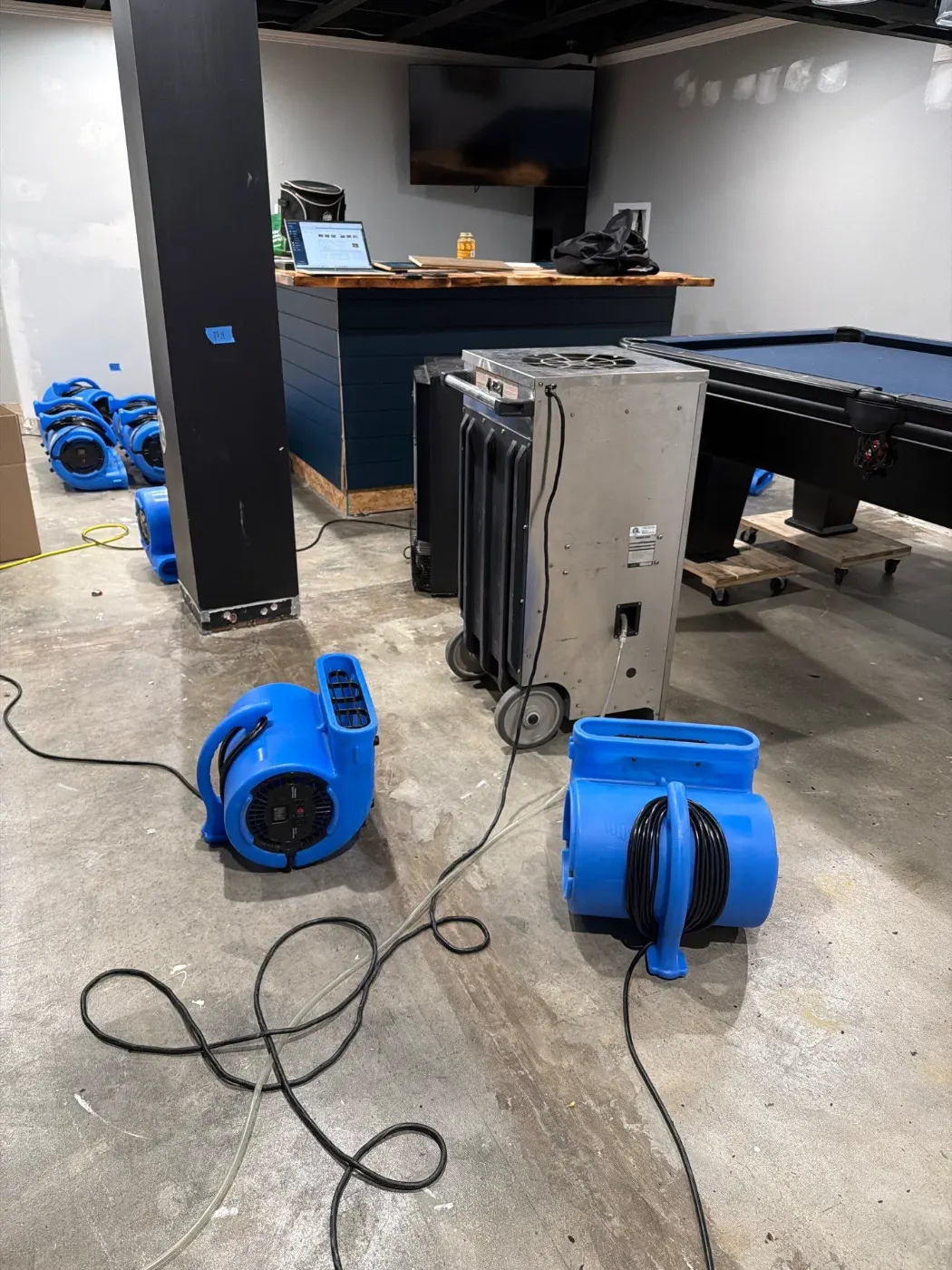
Dehumidifiers and air movers draw real amperage, and a commercial floor plate only has so many circuits to give. Versailles Water Restoration crews calculate the amperage before anything gets plugged in, pull from panels that can carry it, and bring distribution boxes or generator capacity when the panels can't. Equipment placement gets logged by location and run hours, which is also what the carrier's reviewer asks for later.
Versailles Water Restoration invoices the full scope of work performed on your Versailles building, and every line ties to the log. Equipment gets pulled the day the readings justify pulling it, and the log shows which day that was, so nothing on the invoice depends on anybody's memory of how long the job ran. Coverage questions stay with you, your broker and your carrier.
On a wet floor plate, the first call sets up everything after it. Versailles Water Restoration dispatches to Versailles, IN commercial losses day or night with crews and equipment sized to the floor. You can forward the daily readings to your adjuster as the drying runs.
Signs You Need Commercial Storm Damage Restoration
If you notice any of these in your Versailles building, schedule a free inspection before the issue worsens.
Dock concrete that stays dark and cool to the touch for days after the surface water is gone
Fresh brown rings on ceiling tile directly under an interior roof drain line
Standing water in a rooftop unit's drain pan, or condensate running down the duct below it
A supply diffuser dripping water or showing rust streaks after a storm
The smell of damp cardboard in a stockroom that gets stronger after each heavy rain
Tenants moving stock or equipment away from a wall because water keeps showing up there
Corrosion on a fire sprinkler line or head where the pipe runs close to the roof deck
Brown water stains on the ceiling around a rooftop unit's duct drop after each rain
Rust on the metal stud track at the bottom of a wall cavity once an opening is cut
Loose or lifted metal coping on a parapet wall, with fasteners backed out of the wood blocking
How Versailles Water Restoration Handles Commercial Storm Damage
We follow these steps in order on every Versailles job.
First Call Intake
On the call, the team gathers where the water is entering, which areas are occupied, who holds keys and alarm codes, and who can authorize work, so the crew shows up at your Versailles property with the right equipment and the access it needs.
Power and Safety Walk
Before extraction starts, the crew walks the wet areas with your building engineer and confirms which circuits serve them. Cords run through ground fault protection, and the electrician decides what can be reenergized.
Water Path Check
The crew traces the water from the roof breach down through the ceiling to the floors below and photographs the path. Water that backed up out of a drain tied into a sanitary line gets handled as sewage, and that call drives the protocol.
Water Category Call
Rain that started clean can worsen in category as it sits, so the crew classifies the water as it entered and again as it has aged. That call sets which materials get cleaned in place and which come out.
Midpoint Scope Review
Partway through the job, the crew compares the readings with the projected equipment period and tells the property manager if the schedule or the scope has moved. Added removal is photographed and explained before the work starts.
Commercial Storm Damage in Versailles
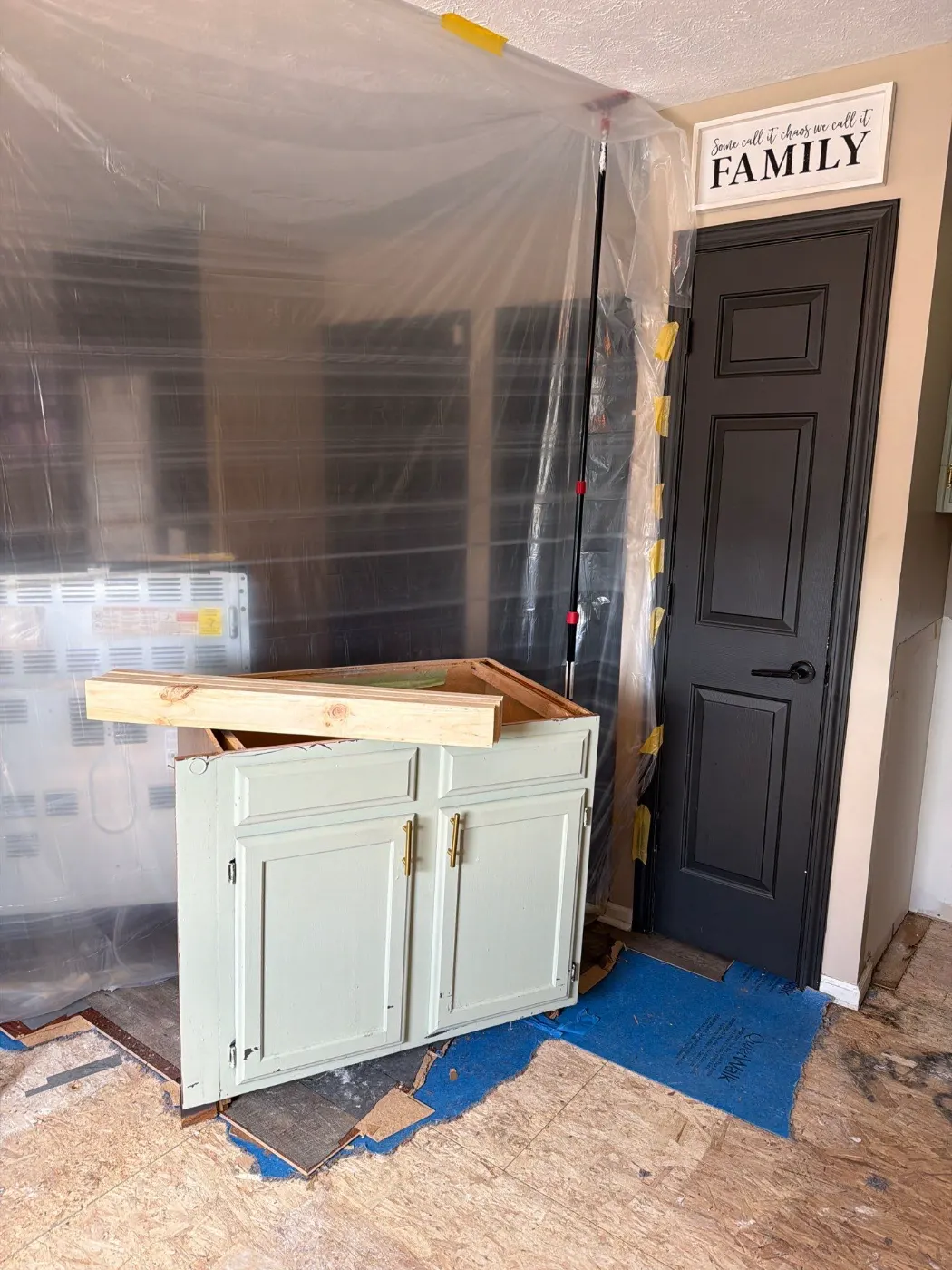
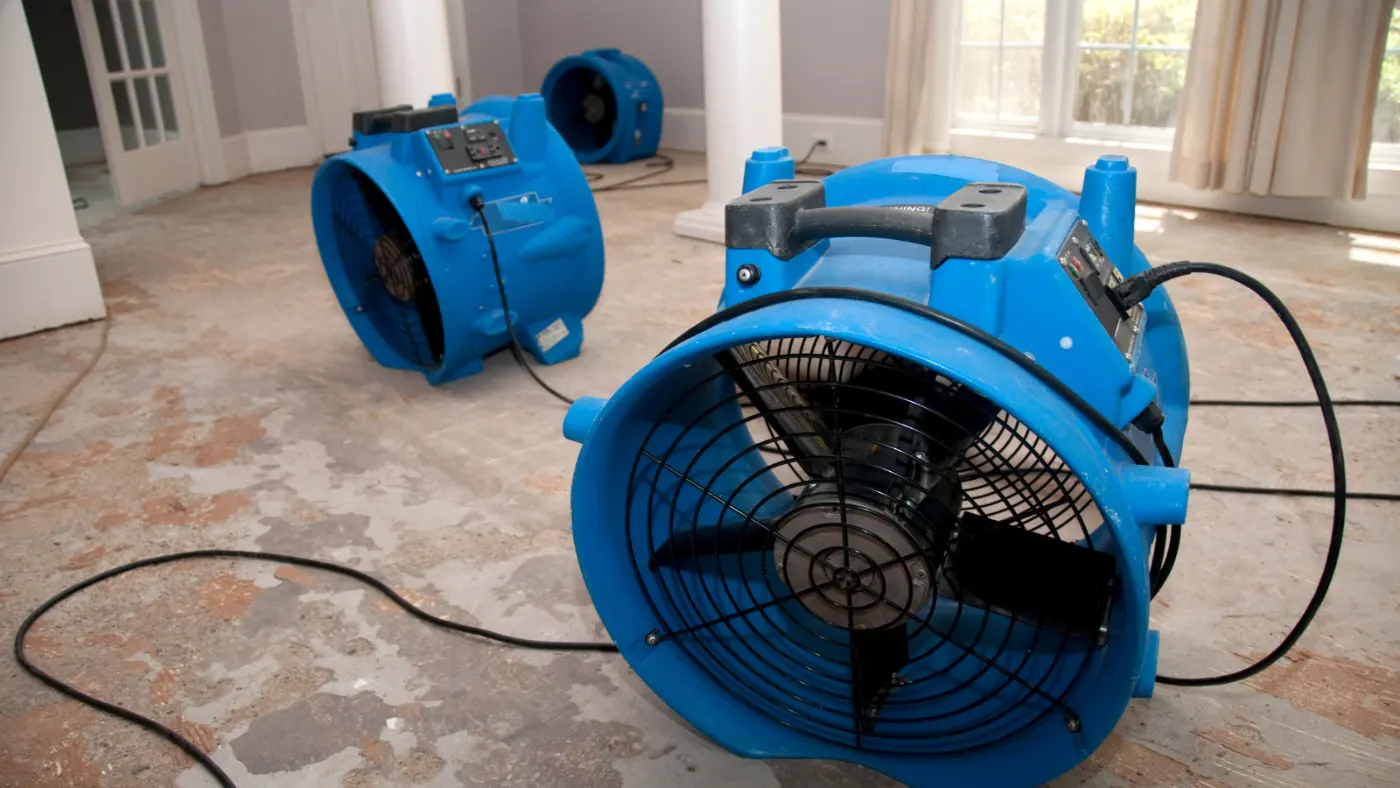
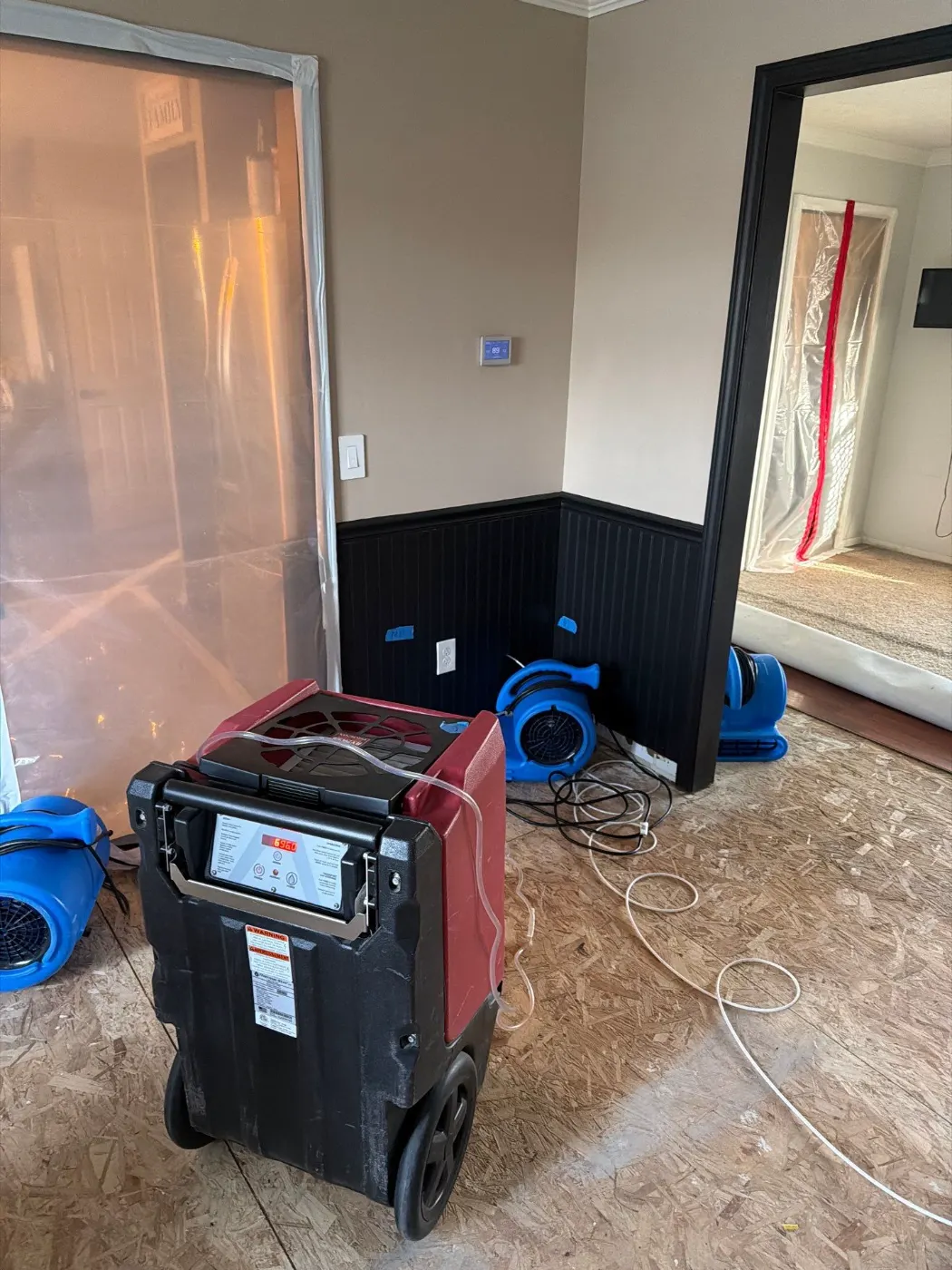
Photographs from real commercial storm damage jobs completed by our crew in Versailles and surrounding areas.
Commercial Storm Damage FAQ
Questions Versailles property managers ask us about commercial storm damage restoration.
Guidance and Standards for Commercial Storm Damage
- The National Weather Service office in Indianapolis posts summaries of recent central Indiana storm and flood events. NWS Indianapolis Event Summaries
- The ANSI/IICRC S500 is the published standard for professional water damage restoration. The current edition is the Fifth Edition, 2021. IICRC S500 Standard
Versailles Neighborhoods We Serve
We take commercial storm damage calls in every part of Versailles. Pick your neighborhood for local details.
Other Restoration Services in Versailles
Versailles Water Restoration handles the full scope of restoration work. Explore our other services below.
Water Damage Restoration in Versailles
24/7 emergency response. IICRC certified water restoration from extraction to full dry out.
Learn more →Basement Flooding in Versailles
Basement water emergencies handled fast. Extraction, drying, mold prevention.
Learn more →Sewage Cleanup in Versailles
Category 3 biohazard cleanup. Full containment, decontamination, structural restoration.
Learn more →Request Commercial Storm Damage Restoration
Reach Us Directly
Our team is available 24/7 for emergencies and ready to schedule inspections during business hours.
Need Immediate Help?
For active water or mold emergencies, call us directly. We are available 24/7.